
Fordham Rams
A angled front view of a grey, white and black ram's head next to a letter "F" in red on a grey background with white and black trim.
George Mason Patriots
A connected green with a gold trim initials "GM" above a black wordmark "GEORGE MASON" above smaller wordmark "ATHLETIC" in green. The "GM" monogram distinguishes the university as the world`s only university to use those…
George Washington Colonials
A gold with white highlights initials "GW" with blue trim.
La Salle Explorers
An arched wordmark "LA SALLE" in white with a blue outline across the letter "L" in gold with blue and gold outline.
Loyola Ramblers
A yellow with the white and red trim letter "L" next to a wolf's head in black and grey.
Rhode Island Rams
Interlocked letters "RI" in dark blue and light blue with white and blue trim. The letters "RI" represent the state of Rhode Island.
Richmond Spiders
A blue silhouette of an eight-legged spider with a wordmark below "RICHMOND" in blue.
Saint Louis Billikens
On a blue shield, a wordmark "SAINT LOUIS" in white at the top and "BILLIKENS" below. A front view of a white and grey with the blue trim troll. Former alternate logo.
St. Bonaventure Bonnies
A front-facing wolf's head in brown, white, and grey on a brown shield with an arched wordmark "BONNIES" in brown about the shield.
Virginia Commonwealth Rams
Initials "VCU" in white on a black formed background on a yellow formed background. One ram's horn curling out of the letter "V."
Atlantic 10 Conference Logo History
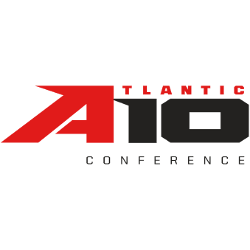
Early versions of the Atlantic 10 Conference logo used straightforward block lettering with minimal styling, giving the league a traditional collegiate look. As the conference expanded, updated designs introduced sharper angles, stronger spacing, and a more dynamic red-and-black palette. These changes represent major moments in the Atlantic 10 logo history. More league information is available on the official Atlantic 10 Conference Wikipedia page.
In more recent years, the Atlantic 10 Conference logo adopted bolder typography and a sleeker horizontal layout to create a stronger media presence. These refined features helped separate the conference visually from other Division I leagues. To compare these primary versions with secondary designs, visit our Atlantic 10 Alternate Logo page, which displays every alternate mark from past to present.
Throughout the Atlantic 10 logo history, the conference worked toward a cleaner and more impactful visual identity. Each update to the Atlantic 10 Conference logo balanced recognition with modern design trends, allowing it to fit consistently across broadcasts, merchandise, and digital use. This evolution also ties closely to the growth of Atlantic 10 Conference teams, highlighting how branding strengthened as membership expanded.
College Sports Fan Products