
Skulls, eye patches, crossed swords. Few visual ideas grab a crowd quite like a pirate. There’s something about that swagger that just works on a jersey, a cap, or a stadium banner. And across the sporting map, a handful of clubs have built whole identities around the buccaneer look. So let’s talk about the logos that made these teams unforgettable.
The Las Vegas Raiders and that crossed-swords shield
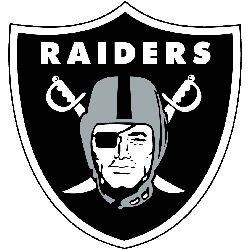
Let’s open with one of the boldest pirate marks in pro sports. The Raiders’ shield shows a helmeted raider in profile, jaw set, two swords crossed behind him like a quiet threat. Silver and black, nothing wasted. The design has held its ground for decades, and you can see why.
The whole thing runs on restraint. No busy background, no extra flourish, just a stern face and those blades. His eyes stay hidden beneath the helmet, which only makes him look more dangerous. One look and it sticks with you.
Crests like this clearly have legs outside the stadium. For example, Big Pirate, a popular social casino, dresses its own logo in that same swashbuckler spirit, the sharp profile and the crossed-blade swagger included. The Raiders pulled off something clever here: a pirate badge that feels fierce without leaning on a single skull.
The Pittsburgh Pirates And a Century of Redesigns
You can’t talk about pirate logos without starting in Pittsburgh. The Pirates have one of the richest visual histories in all of baseball, and honestly, it’s a bit of a maze.
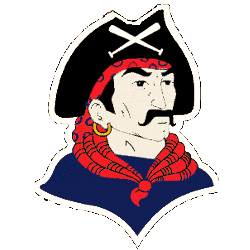
The team first used an actual pirate illustration on letterheads back in 1934, then put a pirate head on the field in 1940. Artist Jack Berger Sr. later drew the stubbled, eye-patched buccaneer that fans grew to love, the one with two gold earrings and a red bandana peeking out under his hat. There’s also the friendlier “smiling buc” by Bob Gessner, the same artist behind the Penguins’ logo, and that cheerful fellow watched over the World Series wins in 1971 and 1979.
Funny enough, the club eventually pushed the pirate to the back and crowned a humble letter “P” as its primary mark. That gold Old English “P” nods straight back to the early 1900s. It’s simple, it’s proud, and it carries decades of meaning in a single stroke. Sometimes less really does say more.
Tampa Bay Buccaneers And The Cannon-Firing Ship
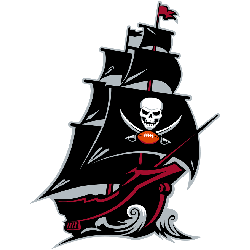
Now let’s sail to Florida. The Tampa Bay Buccaneers might own the most theatrical pirate brand in pro sports. Their flag, a skull over crossed swords with a football, looks as if it were ripped from a galleon’s mast.
And the experience goes way past the badge. Their home stadium features a full pirate ship that fires cannons after every touchdown. Can you imagine a more on-brand celebration? The Bucs leaned all the way into the fantasy, and it paid off. The pirate flag has become one of the most recognizable emblems in the NFL.
Orlando Pirates, Bristol Rovers, And The Global Crew
Pirate fever isn’t just an American thing. Over in South Africa, the Orlando Pirates rank among the most decorated clubs in the country, with multiple league titles and a continental crown to their name. Their badge, a stark white skull and crossbones, is feared across the league.
Then there’s Bristol Rovers in England, nicknamed the Pirates, whose logo shows a buccaneer striking a confident pose atop a football. They’ve spent most of their life in the lower divisions, sure. But that cheeky pirate has stuck around forever, and the fans wouldn’t trade it for anything fancier.
College And Minor League Treasures
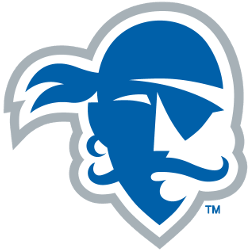
The pirate well runs deep at the amateur level, too. Seton Hall’s Pirates basketball logo and East Carolina’s snarling buccaneer both bring real personality to their schools. And smaller clubs love the theme because it gives them instant character, no long backstory required.
You’d be surprised how much identity a single eye patch can deliver.
What Makes a Pirate Logo Actually Land
So what separates a memorable pirate mark from a forgettable one? It usually comes down to attitude. The best designs feel bold without tipping into cartoonish silliness. The Pirates learned this the hard way, ditching a few too-goofy versions over the years.
A great pirate logo balances menace with charm. It should make a person want the cap and make a rival feel a little uneasy. That’s a tricky line to walk, yet the clubs above nailed it.
Pirate logos endure because they speak to something restless in all of us. The urge to break rules, chase treasure, and fly our own colors. And that, more than any trophy, is why these emblems keep sailing on.