
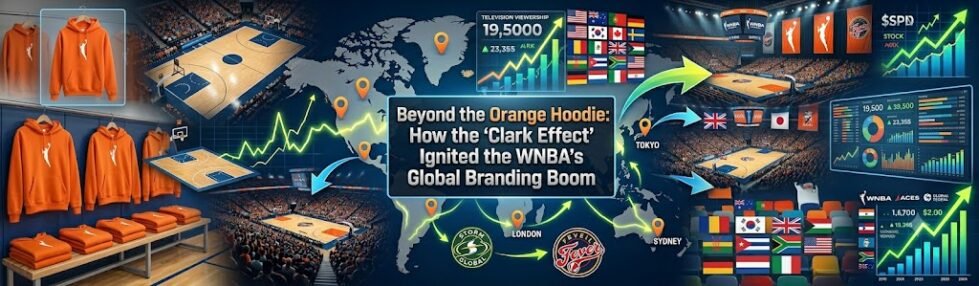
The Tip-Off: From the ‘Clark Effect’ to a Global Takeover
Women’s basketball underwent a seismic shift in 2024, and to call it merely a “moment” would be an understatement. The debut of Indiana Fever’s Caitlin Clark in the WNBA didn’t just boost ticket sales and social media buzz; it opened a gateway for the entire league to step through.
The numbers tell the story: The 2024 WNBA season witnessed a 200% increase in average viewership compared to the previous year, marking it as the most-watched season in 24 years.
The “Caitlin Clark Effect” was the ignition — a once-in-a-generation athlete whose college success seamlessly transitioned into professional excitement. Yet, the subsequent women’s basketball boom wasn’t solely due to her. Sustained ratings, packed arenas, international media coverage, and soaring merchandise demand stem from more than one player’s influence. They arise when a generational talent fits within a brand infrastructure poised to amplify her impact.
Here’s the real narrative: the league wasn’t just fortunate — it was prepared. Understanding how it achieved this readiness requires revisiting a strategic, quieter moment: a rebranding effort that flew under the radar for many fans.
Breaking the Box: The 2019 Rebrand That Prepared the League
Before Caitlin Clark WNBA searches began trending on Google, the league had already embarked on a journey to reposition its brand identity. This transformation began five years prior, with a logo change that carried more significance than most realized.
In 2019, the WNBA collaborated with branding agency Sylvain Labs to revamp its visual identity. The most notable move? Freeing the iconic player silhouette from its traditional rectangular box. According to Graphic Design USA (GDUSA), this redesign aimed to embody a more dynamic and athletic brand — one that felt expansive instead of confined.
The ‘Out of the Box’ philosophy wasn’t merely aesthetic. It declared that the league’s athletes were too significant for any predefined boundaries.
Before the Rebrand: A League Defined by Its Borders
The old logo, with its silhouette trapped inside a rigid rectangle, symbolized an era when women’s basketball fought for mainstream recognition. It communicated competence but lacked ambition. The box, intentionally or not, acted as a limit.
After: Autonomy, Energy, and Open Space
The new emblem allowed the silhouette room to breathe. Lines extended outward, shifting the visual language from “contained sport” to “cultural force.” It subtly signaled to sponsors, media partners, and athletes that the WNBA was gearing up for something beyond its current scope.
The orange color palette, already distinctive, gained renewed energy in this context. The orange hoodie that later became a fan culture icon wasn’t an accident. It was a natural extension of a brand moving boldly toward a wearable identity.
While the 2019 rebrand laid the groundwork, it couldn’t anticipate the catalyst it needed. That catalyst arrived through Indiana — and commercial validation followed swiftly.
The Indiana Fever Catalyst: Commercial Proof of Concept
 Sports Logo History
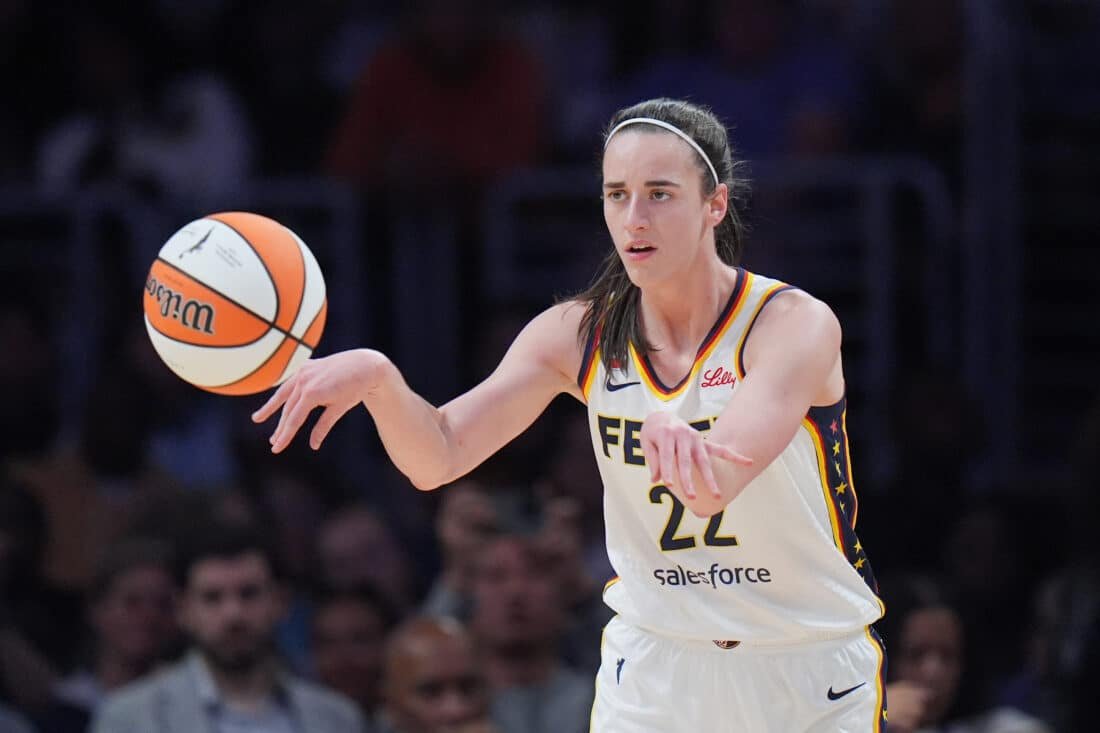
 The data speaks volumes. According to Fanatics and Boardroom, WNBA merchandise sales surged 601% in 2024 compared to 2023. This figure is worthy of a business school case study, not merely a sports headline. Clark’s jersey set a record for the most sales of any draft pick across any professional sport — a monumental achievement in American athletics.
Key commercial milestones from Clark’s rookie season include:
- Draft Night demand spike — jersey pre-orders overwhelmed retail platforms within hours, crashing several vendor sites
- Fever home game sellouts — Indiana set franchise attendance records, with rival venues selling out weeks in advance
- Broadcast viewership records — Fever games often outperformed NBA playoff matchups on the same networks
- Sponsor activation surge — the franchise attracted new regional and national partners, capitalizing on Clark’s broad appeal
The Fever didn’t just sell jerseys; they sold proof that a single athlete could transform a franchise’s commercial identity overnight.
What’s particularly compelling is how Clark’s personal brand aligns seamlessly with Indiana’s identity. Her partnerships, such as those centered on the iconic Caitlin Clark Nike logo, don’t operate independently of the Fever brand. They enhance it. Fans who invest in Clark also invest in the Fever. Sponsors activating around her Nike identity see the Fever’s logo in the same frame.
This convergence between athlete brand and franchise identity underscores why the conversation about signature shoes—the pinnacle of athlete branding—is pivotal to the WNBA’s future.
The Nike Era: Signature Shoes and the Future of Athlete Branding
The Indiana Fever’s commercial transformation didn’t occur in isolation. Alongside every sold-out arena and record-breaking broadcast was a branding deal that redefined a WNBA athlete’s marketplace significance. The Caitlin Clark Nike partnership — culminating in a personal logo and a signature shoe — isn’t just a milestone for one player; it’s a beacon for the entire league.
The Logo
 Sports Logo History
 The Shoe
Signature shoes are the ultimate in sports branding. They transform an athlete into a product line, a lifestyle category, a cultural icon. Historically, this privilege was almost exclusively held by NBA stars and a few male soccer players. Clark’s signature shoe breaks this mold, positioning a WNBA player as a full commercial peer — one whose name can move products on a shelf, not just fill seats in an arena.
The Market
These deals create structural changes for the league. As WNBA Chief Growth Officer Colie Edison stated:
“What’s happening now in women’s basketball confirms what we’ve always known: The demand is there, and women’s sports represent a valuable investment.”
When Nike elevates one player to signature status, it validates the entire ecosystem surrounding her. Sponsors follow suit. Media rights negotiations shift. Brand value compounds across the roster.
Securing these gains in the long term is the question facing everyone as we approach 2026.
2026 and Beyond: Is the Boom Sustainable?
The momentum is undeniable — but the question on every analyst’s mind is whether it will last.
The short answer is yes, provided the structural components are in place. The most critical of these is the 2026 WNBA Collective Bargaining Agreement. According to the LA Times, the new CBA is expected to significantly raise player salaries and establish a new benchmark for professional women’s sports leagues globally. Higher pay means players can invest more in their personal brands, creating a self-reinforcing cycle in which league visibility and individual marketability reinforce one another.
What’s Next for the WNBA’s brand era:
- Expansion franchises will inherit a proven visual identity playbook — one built on emotional design, cultural relevance, and superstar equity
- Media rights deals will become more lucrative as advertisers pursue the younger, digitally engaged audience the league has nurtured
- Signature moments like each new Caitlin Clark shoe release will serve as cultural events, driving mainstream coverage far beyond sports media
The golden thread running through every development — from sold-out arenas to boardroom negotiations — is identity. The WNBA’s visual and cultural brand is no longer a supporting asset; it’s the driving force. Build on it, and the boom becomes a baseline.
Key Indiana Fever Caitlin Clark Takeaways
- Draft Night demand spike — jersey pre-orders overwhelmed retail platforms within hours, crashing multiple vendor sites
- Fever home game sellouts — Indiana set new franchise attendance records, with road games at rival venues selling out weeks in advance
- Broadcast viewership records — Fever games regularly outperformed NBA playoff matchups on the same networks
- Sponsor activation surge — the franchise attracted new regional and national partners capitalizing on Clark’s crossover appeal
- Expansion franchises will inherit a proven visual identity playbook — one built on emotional design, cultural relevance, and superstar equity
Last updated: May 19, 2026