
Soccer has a unique power to unite people worldwide, bringing together millions of fans. But it’s not just the game on the field that creates this bond; the emblems of national teams play a crucial role, too. These symbols capture nations' rich history, values, and hopes, making them more than just logos. As big tournaments approach and excitement builds, fans immerse themselves in the spectacle. The emblems of their favorite teams become central to the celebration, marking the heart and soul of soccer culture.
The national soccer emblems go beyond being appealing graphics. They tell stories that embody a country's history and identity through elements like heritage symbols and wildlife motifs or colors from the national flag and mythical creatures from local legends to instill a strong sense of national pride in fans who enjoy a range of entertainment activities related to the sport including exploring real money casinos for an added thrill while watching soccer matches. No matter the platform they're on. Be it jerseys, flags, or merchandise. These logos serve as a symbol of unity and pride for the country's shared identity.
The Evolution of Soccer Logos
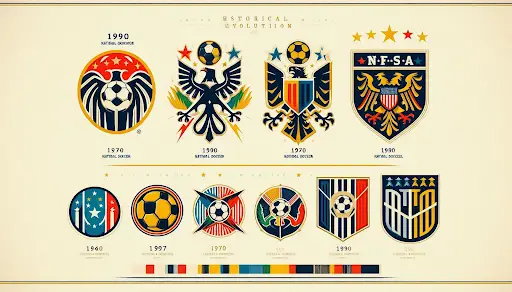
Soccer logos have evolved significantly since the sport's early days. What began as simple monograms or basic shield designs has developed into complex, meaningful artworks. This evolution reflects broader trends in graphic design and branding, as well as shifts in national identity and cultural expression.
Critical milestones in soccer logo evolution:
- 1900s-1930s: Simple text-based designs or bare heraldic shields
- 1950s-1970s: Introduction of national animal symbols and more detailed crests
- 1980s-1990s: Modernization and simplification of designs for better reproduction
- 2000s-present: Digital-friendly designs with a balance of tradition and modernity
Iconic Elements in National Team Logos
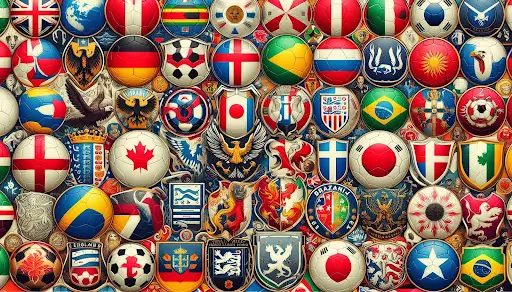
Numerous national team emblems incorporate recurring elements that reflect the essence of their country's heritage and culture. These iconic symbols carry historical or cultural meanings that make them easily identifiable to fans and rivals.
Common elements found in soccer logos:
- National animals (e.g., England's Three Lions, Germany's Eagle)
- Plant life (e.g., Canada's Maple Leaf, Portugal's Laurel Wreath)
- Mythical creatures (e.g., Wales' Red Dragon, China's Phoenix)
- Historical emblems (e.g., Spain's Coat of Arms, Scotland's Thistle)
- Cultural symbols (e.g., Japan's Rising Sun, Mexico's Aztec Eagle)
These symbols serve a greater purpose than mere aesthetics on a uniform; they resonate with a nation's shared emotions and nostalgic recollections rather than just the world of athletics. The athletes who wear these logos are not merely symbolizing a team; they embody the aspirations and reveries of an entire populace.
The Impact of Logo Design on Fan Culture
A well-designed logo can become a rallying point for fans, fostering a sense of belonging and shared identity. It's common to see supporters with tattoos of their national team's emblem or entire stadiums transformed into seas of color coordinated with the team's visual identity.
Ways logos influence fan culture:
- Merchandise sales and brand loyalty
- Social media engagement and hashtag campaigns
- Stadium choreography and tifo displays
- Cultural exports and national branding
The power of these logos extends far beyond the soccer pitch. They become cultural ambassadors, representing their nations globally and influencing how countries are perceived internationally.
Controversy and Change in Logo Design
While logos are meant to unite, they can sometimes become sources of controversy. Changes to long-standing designs can spark heated debates among fans, illustrating people's deep connection with these symbols.
Recent logo redesigns that stirred debate:
- Italy's 2023 Logo Simplification
- England's 2023 adaptation of the Three Lions crest
- USA's 2023 updated crest design
These changes often reflect broader societal shifts or attempts to modernize a team's image. However, they must be handled delicately to balance innovation with respect for tradition and fan sentiment.
 Sports Logo History
 The Future of Soccer Logo Design
Soccer logo design will likely continue evolving as we look to the future. With the rise of digital platforms and the increasing importance of brand versatility, we can expect to see more adaptable, dynamic logo systems.
Emerging trends in soccer logo design:
- Responsive logos that adapt to different digital platforms
- Incorporation of augmented reality (AR) elements
- Sustainable and eco-friendly logo applications
- Inclusion of diverse cultural elements to reflect changing demographics
Designers will face crafting logos that balance modernity and honor the deep heritage they symbolize. As football gains popularity worldwide, these symbols will significantly define national pride and nurture a feeling of connection among supporters across the globe.
The discussion about soccer logos is not just about the visuals; they carry meanings beyond images. They represent pride, cultural legacy, and the unity of this beautiful game. As soccer progresses, the identity symbols will also adapt to mirror the evolving nature of the sport and the communities it stands for.
The $17 Million Caitlin Clark Effect: How One Rookie Changed the WNBA Forever
Visit Our YouTube Channel