
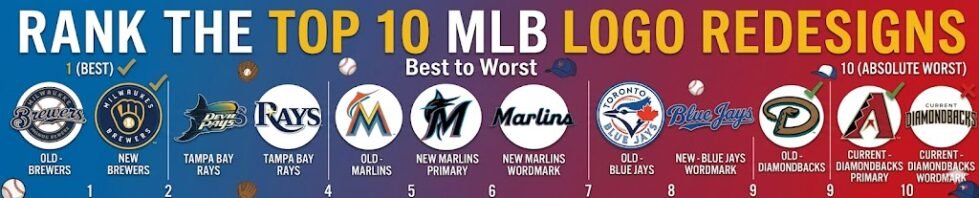
Logos are more than just graphics. They carry history, identity, and emotion. In Major League Baseball, a logo redesign can spark excitement—or backlash. Some updates modernize a brand while respecting tradition. Others miss the mark entirely.
This ranking looks at 10 notable MLB logo redesigns and ranks them from best to worst. The criteria are simple: clarity, originality, respect for legacy, and long-term appeal.
1. Milwaukee Brewers (2018 Redesign) — A Perfect Revival
 The Brewers’ return to the classic glove-and-ball logo is a masterclass in redesign. It blends nostalgia with clean, modern execution. The hidden “m” and “b” within the glove remains one of the smartest visual tricks in sports branding.
This redesign works because it doesn’t overcomplicate things. It honors the past while refining the lines and colors for today’s audiences. Few logos manage to feel timeless and fresh at the same time. This one does.
2. San Diego Padres (2020 Redesign) — Clean and Confident
The Padres leaned into their brown-and-gold roots. It paid off. The redesign feels intentional and grounded in the franchise’s identity.
Gone are the overly complex elements. In their place is a simplified “SD” mark that looks sharp on caps and merchandise. The color palette is bold without being loud. It’s a reminder that restraint often leads to better design.
3. Toronto Blue Jays (2012 Redesign) — A Smart Throwback
 Toronto’s redesign brought back the classic blue jay head with a maple leaf. It was a clear nod to the team’s early identity.
What makes this redesign stand out is the balance. The logo feels distinctly Canadian while maintaining a sleek, modern aesthetic. It’s detailed but not cluttered. A rare achievement.
4. Miami Marlins (2019 Redesign) — Fixing a Misstep
The Marlins’ original 2012 rebrand was widely criticized. Too flashy. Too abstract. The 2019 update corrected the course.
The new logo simplifies the marlin and refines the color scheme. It still has personality, but now it feels more like a baseball team than a nightclub brand. Improvement matters, and this redesign proves it.
5. Houston Astros (2013 Redesign) — A Return to Strength
 When the Astros moved to the American League, they reintroduced the navy and orange scheme. It was a wise move.
The star-centered “H” logo is bold and instantly recognizable. It draws from the team’s past while establishing a clear, modern identity. This redesign feels purposeful, not forced.
6. Arizona Diamondbacks (2016 Redesign) — Bold but Divisive
 Arizona went all-in on a modern look. Sharp edges. Dark tones. A more aggressive snake imagery.
Some fans appreciated the change. Others found it too far removed from tradition. The “A” logo is distinctive, but the overall branding can feel inconsistent. It’s a redesign that takes risks—and doesn’t fully stick the landing.
7. Seattle Mariners (1993 Redesign) — A Mixed Legacy
 The Mariners introduced the compass rose logo in the early ’90s. It replaced a more playful trident design.
While the new logo added a sense of direction and symbolism, it also lost some personality. It’s clean and professional, but not particularly memorable. Over time, it has grown on fans, but it lacks the charm of top-tier designs.
8. Tampa Bay Rays (2008 Redesign) — Safe and Forgettable
The Rays dropped the “Devil” from their name and shifted to a sunburst theme. The intent was clear: create a more approachable brand.
The result? A logo that feels generic. It’s not bad, but it doesn’t stand out. In a league full of iconic imagery, blending in is a problem.
9. Los Angeles Angels (2005 Redesign) — Overly Polished
But the execution feels too polished. The gradients and shine quickly date the design. It lacks the simplicity that makes logos endure. Sometimes less really is more.
10. Cleveland Guardians (2022 Redesign) — A Missed Opportunity
Instead, the result feels rushed. The winged “G” lacks clarity and emotional connection. It doesn’t fully capture the city’s identity or the weight of the change. For such an important rebrand, the outcome feels underwhelming.
The Bigger Picture: Why Logos Matter
A logo isn’t just decoration. It’s a team’s first impression. It appears on jerseys, caps, and broadcasts. It shapes how fans connect with a franchise.
This connection also extends beyond the field. For many fans, a team's visual identity influences how they engage with the sport overall. That includes areas like fandom, merchandise, and even betting—one reason why baseball is one of the best sports to bet on is its consistency, long season, and the familiarity fans build with teams through elements like branding and history.
Trends in MLB Logo Redesigns
Across these examples, a few patterns emerge.
First, simplicity wins. The best logos avoid unnecessary detail. They focus on strong shapes and clear symbolism.
Second, tradition matters. Teams that respect their history tend to resonate more with fans. Suddenly, drastic changes often face resistance.
Third, adaptability is key. Logos must work across digital platforms, merchandise, and stadium displays. Clean designs scale better.
According to MLB.com, branding plays a crucial role in how teams connect with both local and global audiences, especially in an increasingly digital sports landscape.
Final Thoughts
MLB logo redesigns are always a gamble. Some pay off. Others don’t.
The best redesigns strike a balance. They honor the past while embracing the present. They simplify without losing meaning. And most importantly, they resonate with fans.
From the Brewers’ near-perfect revival to the Guardians’ underwhelming debut, these rankings highlight how much design matters in baseball. It’s not just about looking good. It’s about feeling right.