

Few sports emblems survive five decades without undergoing major plastic surgery, yet the New Orleans Saints manage to do so with a single, elegant symbol: the fleur-de-lis. Since 1967, the mark has undergone changes only in line weight, shadow, and color, not in its concept. Fans wear it on Mardi Gras beads, construction helmets, and even wedding cakes. When a design resists passing trends for this long, people assume magic; in fact, durability comes from a blend of cultural roots, visual math, and brand discipline. Before we examine those layers, note how modern sponsorship also taps into heritage. Advertisers as diverse as an insurance firm and a bookmaker online use Saints imagery to anchor local credibility in a crowded market.
A Badge Older than Football
The fleur-de-lis predates the NFL by at least eight centuries. French kings used the lily as a symbol of purity and divine favour; later, Louisiana adopted it on flags, police badges, and city seals. When the NFL awarded New Orleans an expansion team, the league’s art department faced a rare gift: a ready-made civic icon that locals already treated as part of their identity. Instead of inventing a mascot bird or a helmet monogram, designers refined what the city offered. That shortcut paid compound interest: each time the Saints take the field, viewers see something that also belongs to the town, the state, and even to vintage jazz album covers. Shared ownership fosters emotional stickiness far deeper than a marketing brainstorm could.
Minimal Tweaks Keep the Story Intact
Teams like the Buccaneers or Rams reinvent their visual DNA every 15 years, hoping for fresh merchandise revenue. The Saints follow the opposite logic: “change quietly, stay familiar.” Over half a century, they adjusted only four parameters: outline width, metallic gradient, interior stroke, and Pantone shade, always within the strict boundaries of contrast and recognizability. To illustrate how light those touches are, compare the original 1967 badge, the 2000 millennium polish, and the current flat version released in 2017.
We’ll frame those steps in a compact table; notice how minor each update is compared with franchises that flip entire mascots.
Year | Main Update | Rationale | Fan Reaction |
1967 | Simple black fleur-de-lis, white outline | Align with the city flag colors | Warm — badge felt “already ours” |
2000 | Added gold gradient, thicker outline | HDTV era demanded metallic shine | Positive — jersey sales up 23% |
2012 | Removed gradient for flat gold | Digital screens prefer flat tones | Neutral — many fans didn’t notice |
2017 | Slightly brighter gold (Pantone 123) | Match Nike Color Rush fabric | Approved — social polls 80% “looks the same” |
The table ends here; let’s unpack why such micro-edits work when others fail.
Context Before Ego
Most NFL redesigns have chased contemporary tastes, with sharper edges in the 1990s, 3-D bevels in the 2000s, and flat minimalism after 2013. The Saints flip the sequence. First, they ask, “Does the next printing method or fabric require a tweak?” Only if production constraints change, such as the inability to render a bevel with embroidery thread, does the badge adjust. In other words, technology dictates iteration, not boardroom boredom. Because the public rarely senses the production issue, each update feels invisible, so loyalty stays unshaken.
Chromatic Discipline
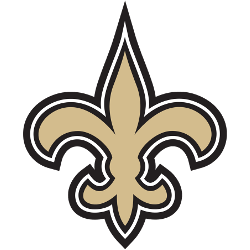 Black and old gold announce the franchise at a glance. Marketing studies show that fans can identify those hues faster than they can identify the silhouette itself. The trick is the ratio: helmets contain 60% gold, while jerseys contain only 20%. That contrast pops on both daylight and prime-time cameras, while away uniforms invert the ratio to stand out against opponents. Unlike teams testing neon alternates, the Saints allow one novelty per decade, the popular Color Rush white-on-white, with the crest untouched. Visual psychologists refer to this as anchoring: a stable core helps audiences accept minor changes without perceiving a brand drift.
Storytelling Channels Beyond Fabric
The club extends its mark far beyond sport. City sewer covers cast the fleur-de-lis; bike-share stands paint it on frames; even hurricane-recovery signs use the symbol as shorthand for communal resilience. When locals see the badge on a festival poster or, lately, in esports cross-promotions with a bookmaker online, the context may differ, but emotional wiring stays constant. Each placement reinforces the idea that “fleur-de-lis equals home,” so the NFL emblem piggybacks on city pride at zero extra cost.
Guardrails Against Gimmicks
Longevity also means saying no to cartoon versions on kids’ merchandise, no color-swap theme nights, no charity logos morphing the mark into hearts or ribbons. The marketing department issues strict brand guidelines, including line thickness, negative-space buffer, and approved Pantones. Retail partners who deviate from the risk contract penalties. Some call it rigid, yet that rigidity prevents dilution. Compare with the Jacksonville Jaguars’ spotted helmet experiment (scrapped within two seasons) or the Browns’ brief flirtation with a bulldog mascot; in both cases, fan confusion led to reversals and extra cost.
Flexibility Hidden Under Tradition
The badge may look unaltered, yet digital cricket crawls, mobile apps, and AR filters extend it in dynamic ways. During a 2023 pre-season test, the team’s Instagram lens allowed users to tilt their phones to rotate a 3D fleur-de-lis over their selfie. Because the symbol’s geometry is symmetrical, motion remains smooth even in low-resolution front cameras, something that asymmetrical marks struggle with. Thus, the emblem meets Gen-Z interaction norms without losing old-school dignity.
Can the Formula Apply Elsewhere?
Other franchises hold civic icons, such as the Chicago Bears’ “C” or the Maple Leafs’ leaf, yet still overhaul their designs. The Saints demonstrate the power of incremental stewardship by protecting core shapes, allowing hardware needs to guide micro-changes, embedding the mark in city life, and enforcing usage discipline. The method won’t fit clubs whose original logos lack iconic weight, but it provides a blueprint: heritage first, novelty last.
Closing Drive
Logo endurance rarely comes from luck. In New Orleans, the fleur-de-lis entered sports with centuries of cultural significance, then survived by resisting the churn of gimmicks. Each alteration solved a production hurdle, never chased a fad. As media pallets expand, from TV stripes to TikTok filters, the badge’s clean geometry continues to scale with minimal retouching. Fans, sponsors, and even neutral viewers perceive that stability as authenticity, spending willingly on jerseys, mugs, or banner ads because the symbol feels bigger than the franchise itself. In a league where branding often bends to quarterly trends, the New Orleans Saints remind us that the surest way to look fresh tomorrow is to honour what already feels timeless today.
___
Sports Logo History is a vibrant community of sports logo enthusiasts who share a deep appreciation for the captivating histories behind each team's logo. We take pleasure in exploring the evolution of primary logos, alternate logos, and wordmark logos from renowned leagues such as the NFL, NBA, MLB, MLS, NHL, Premier League, WNBA, CFL, NCAA, UFL, ABA, USFL, AAF, and XFL. Immerse yourself in the intricate details and stories behind these iconic symbols that represent the essence of each team.
In the enthralling realm of sports, the battle of logos among different leagues unfolds as a captivating and ongoing spectacle. Step into the world of Sports Logo History, where we showcase the relentless pursuit of distinction by leagues such as the NFL, NBA, MLB, Premier League, and countless others. Witness the captivating journey as each league strives to create logos that not only capture the essence of their sport but also resonate deeply with fans.
Immerse yourself in the comprehensive sports history provided by Sports Team History, our esteemed partner site, where you can discover the triumphs, challenges, and defining moments that have shaped the legacies of professional sports teams. Stay up to date with the latest sports news through Sports News History, a platform delivering 24/7 coverage of highlights, player interviews, and game analyses. Additionally, express your unwavering support for your favorite teams by exploring Sports Store History, the premier sports team marketplace offering a vast selection of jerseys, memorabilia, and collectibles. Join our community today and celebrate the rich history, iconic logos, and passion of sports.
