

Football club crests are small theatres of belonging: a ship, a crown, a rose, a stripe of color that says “home” even on an away day. For most of the 20th century, a badge was made of cloth and paper. Now it must also survive a swipe—shrunk into an app icon, stamped onto merchandise, animated on a stadium screen. That change has pushed clubs into a new design era: simplification without amnesia, modern lines that still carry old stories.
When badges borrowed the city’s coat of arms
Early club identities often leaned on local heraldry and civic symbolism, because a club was, first, a place. Real Madrid’s crest history is a crisp example: in 1920, King Alfonso XIII granted the club royal patronage, and the crown was added to the badge alongside the “Real” title. When the monarchy fell in 1931, royal symbols were removed; later, the crown returned, showing how politics and identity can literally redraw a logo.
This heraldic habit spread across Europe: shields, animals, towers, saints, and mottos. The point was legibility in a different sense, which meant it didn’t need to be “readable at 24 pixels,” but instead readable as heritage.
Television, trademarks, and the age of bolder lines
As football moved deeper into mass media, clubs discovered an unromantic constraint: reproduction. Badges had to print cleanly, embroider well, and look distinct on grainy broadcasts. Shapes tightened; outlines thickened; details were either simplified or pushed into secondary marks.
Manchester City’s badge history is a valuable case study. Wikipedia notes the club adopted a new badge in 1997 because the previous one was ineligible for trademark registration, and later ran a fan consultation that led to a replacement inspired by older circular designs, with an official unveiling before a Sunderland match on 26 December 2015. Logos don’t evolve only because tastes change; they grow because rules, media, and commerce change.
The minimalist gamble: Juventus turns a crest into a symbol
If one redesign announced the modernist mood, it was Juventus. The club’s stark “J” identity entered its visual system on 16 January 2017, as part of a major rebranding operation by Juventus. Supporters argued about what was lost because there’s no bull, no shield, and no ornamental history anymore. Still, the strategy was clear: a mark that reads instantly on a phone and scales into fashion.
That logic also explains why matchday apps borrow club imagery so heavily. A crest becomes a navigation sign: a tap, a notification, a shortcut to community. A matchday scroll can go through a melbet registration beside fixtures and live scores, because digital fandom now moves through sign-ins as much as turnstiles.
Back to roundels: Manchester City and Atlético Madrid rediscover the circle
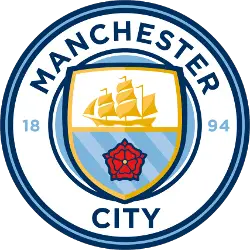
Atlético Madrid took a related path. In December 2016, the club announced an updated badge for the 2017-18 season, keeping the bear-and-strawberry-tree scene associated with Madrid while refining the shapes for modern use. The shared design direction is easy to spot: less clutter, stronger geometry, and symbols that remain recognizably local.
The badge as a second-screen interface
By 2026, a club logo is rarely just “a crest.” It is also an icon in a crowded grid among streaming apps, ticketing wallets, fantasy teams, and betting platforms. That ecosystem rewards clarity: fewer lines, higher contrast, and a shape that survives the compression of a tiny screen.
2026 and the new badge wars: modern needs, old loyalties
The next wave of redesigns is already being negotiated in public. Newcastle United announced plans to redesign its badge for the 2026–27 season, describing the current crest as “outdated” for modern digital use while promising supporter consultation and a “refine and revive” approach rather than a radical break. The debate between heritage and clarity has become the defining conflict in crest design.
Design writers have noticed the same tension across the game. Creative Bloq describes clubs being pulled toward flatter, more reproducible forms because modern marketing and digital display demand it, even as fans resist losing mottos and detail.
The trend line into 2026 is not one single aesthetic. It’s a negotiation: keep the story, lose the noise, and make sure the badge still feels like a promise rather than a product.
===
Sports Team History is your ultimate destination to explore the rich heritage and iconic logos of professional sports teams across MLB, MLS, NBA, NCAA, NFL, NHL, Premier League, WNBA, UFL, XFL, ABA, AAF, and USFL. Immerse yourself in the captivating tales and memorable moments that have shaped each team's legacy.
But that's not all! At Sports Team History, we believe in celebrating the exceptional talents that have graced the sports world. That's why we're thrilled to announce our upcoming "Greatest Player Poll" where fans like you can cast your votes and have your say in determining the greatest players of all time in various sports.
Our partner site, Sports Logo History, offers a vibrant community of logo enthusiasts who appreciate the evolution of team visual identities. Dive into detailed analysis and discussions surrounding logos representing the teams we love. Stay updated with Sports News History, providing 24/7 sports news coverage to keep you informed and engaged with the latest developments. Lastly, explore the premier sports team marketplace at Sports Store History, where you'll find a wide selection of jerseys, caps, and collectibles to showcase your team spirit. Embark on a journey through time, celebrate team logos, stay informed with the latest news, and discover unique sports memorabilia to enhance your collection. Let Sports Team History fuel your passion for sports.
